
India's manufacturing and services sectors are set to create over 35 crore new jobs by 2030, necessitating urgent skilling and industry-academia collaboration. Key sectors like automotive, logistics, telecom, clean energy, and textiles will drive this growth, highlighting the need for competency-driven learning to prepare the workforce.

'The smartphone had become my boarding pass, my digital ID, my train ticket repository, my taxi booking tool and my payment instrument,' says Brijesh Haldia

Prime Minister Narendra Modi, at the India Mobile Congress (IMC) 2026, articulated a vision for India's communications sector, emphasizing a global framework to combat cyber frauds and deepfakes. He called for India to become a hub for innovation and product development for the world. Industry leaders lauded his vision, highlighting India's robust digital infrastructure and its journey towards becoming a global technology leader, with a focus on trust, security, and responsible innovation.

Most of the companies AI models and AI agents targeted had no idea their networks had been breached.

Sivakasi, India's fireworks capital, is eyeing global markets as green crackers, rising demand and interest from overseas buyers offer a chance to challenge China's dominance.

Infosys co-founder S Gopalakrishnan states that software engineers must now be retrained to review and certify AI-written code, as AI has automated coding. He emphasises that AI-generated code cannot be fully trusted and requires human oversight. Gopalakrishnan also highlights that IT services and outsourcing will continue, and AI presents significant opportunities for new products and services, particularly for India and startups.

The Indian Institute of Management Ahmedabad (IIMA) has opened applications for the second batch of its two-year Blended MBA Programme in Business Analytics & Artificial Intelligence (BPGP: BA & AI). The programme, offered by the Krishnamurthy Tandon School of AI, aims to develop professionals who can integrate AI technology with management principles, addressing the industry's need for leaders capable of driving transformation and managing complex IT infrastructure, including data centres.
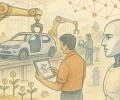
IIT-Kharagpur announced the establishment of India's first dedicated academic school for Physical Artificial Intelligence (AI), named the Benjamin Gupta School of Physical AI. Funded by a Rs 35 crore investment, including contributions from alumnus Vinod Gupta and an anonymous donor, the school will focus on developing intelligent systems that interact with the physical world, moving beyond conventional data-driven AI. Academic programmes are expected to commence soon, aiming to foster reliable and responsible AI technologies for various applications.

IBS Group has launched Naviq Technology, an artificial intelligence company dedicated to the global travel industry, backed by a substantial USD 500 million investment over the next five years. The new venture aims to partner with major travel players to drive business transformations, modernise operations, and leverage AI for new revenue streams, with plans for significant job creation in India.

US Secretary of State Marco Rubio kick-started a three-day visit to India on Tuesday to advance bilateral ties in energy, trade and investment, defence, critical technologies, and exchange views on the West Asia crisis.

A new EY India report highlights how young professionals, women wealth creators, entrepreneurs, ESOP beneficiaries, and digitally active consumers from Tier-2 and Tier-3 cities are fundamentally changing India's wealth ecosystem. This shift is evidenced by increased participation of young and women investors, a rise in disciplined investing via SIPs, and the crucial role of Digital Public Infrastructure in democratizing access to long-term wealth creation. The report predicts over 100 million new investors by 2035.

India's Production-Linked Incentive (PLI) schemes have achieved only 28% of their targeted employment generation by FY26, despite mobilising 76% of the envisaged investment, according to a NITI Aayog assessment. The report highlights an uneven translation of manufacturing growth into job creation and calls for refining the schemes' design, shifting towards demand-side support and sector-specific interventions.
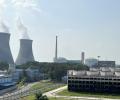
Atomic Energy Commission Chairman Ajit Kumar Mohanty announced that India's private sector is projected to invest Rs 7.5 lakh crore and contribute 30 GW towards the nation's goal of achieving 100 GW nuclear power capacity by 2047. This marks a significant policy shift, facilitated by the SHANTI Act, encouraging private participation in nuclear energy beyond the traditional public sector model. The country is also exploring Small Modular Reactors (SMRs) for industrial needs and advancing its three-stage nuclear power programme, leveraging its substantial thorium reserves.

India's private equity (PE) industry is transitioning from a 'spray and pray' approach to a more selective investment model, focusing on established businesses, greater strategic influence, and operational transformation to generate definitive returns, according to industry leaders Renuka Ramnath and Amit Chandra.

Arundhati Bhattacharyya, Salesforce President and CEO for South Asia, highlighted how cloud and AI are democratising capabilities, offering India a unique opportunity to leapfrog in the technology revolution. Speaking at the IMC Chamber of Commerce, she emphasised that AI will create more jobs by addressing unmet business demands and could significantly boost India's GDP, with NITI Aayog estimating a USD 500-600 billion addition by 2035. She urged Indian businesses to transform using technology, focus on data, redesign work, and invest in skills, stressing that AI is not just for large corporations.

Check Point Software Technologies has appointed Krishnan V V as its Managing Director and Country Head for India and South Asia. He will be responsible for business strategy, P&L, go-to-market execution, and organisational development, leveraging his three decades of leadership experience in the cybersecurity and technology sectors.

Prime Minister Narendra Modi, at a Diwali Milan programme, shared a humorous anecdote from 2001 when a "women's brigade" of journalists discovered his impending appointment as Gujarat chief minister and demanded sweets. He lauded the media's role in Indian democracy, reflecting on its evolution from press releases to Instagram reels and recalling his early days arranging chairs for media gatherings. Modi also discussed technological shifts in journalism and praised reporters' dedication in covering challenging events.

Air Chief Marshal Ashutosh Dixit, India's new Chief of Air Staff, has outlined his top priorities, focusing on restoring the IAF's fighter squadron strength, accelerating indigenous programmes like Tejas and AMCA, and enhancing tri-services synergy. His vision, encapsulated by the acronym VAYU (Vigilance, Aatmanirbharta, Yukti, Unity), emphasises self-reliance in defence, tactical innovation, and integrated operations with the Army and Navy, alongside a commitment to air warrior welfare and national security.

Uttar Pradesh Chief Minister Yogi Adityanath announced the state's ambitious shift from mobile phone assembly to advanced microchip manufacturing, data centres, and artificial intelligence. He highlighted significant investments and growth in the digital economy, attributing the transformation to the "double-engine government's" alignment with national initiatives like 'Make in India' and 'Aatmanirbhar Bharat'. Adityanath also criticised previous administrations for hindering the state's potential.

Sikkim's Education Minister Raju Basnet highlighted the potential of computational mathematics and artificial intelligence in predicting landslides and weather risks at an international conference. Experts discussed the role of mathematics in AI, scientific discovery, and the need for interdisciplinary research and international cooperation to develop reliable AI systems for real-world challenges.

Union Finance Minister Nirmala Sitharaman expressed strong confidence in India achieving over 10 per cent economic growth, advocating for increased technology adoption and innovation. She urged overcoming scepticism and highlighted technology's transformative role in agriculture and public sector reforms, while also launching a new fund and book at an IIT Madras event.

A member of the Parliamentary Standing Committee on Coal, Mines & Steel, Sasmit Patra, highlighted the transformative potential of AI and digital technologies in making India's mining and metals sector more productive, transparent, and globally competitive. He emphasised their role in enhancing efficiency, safety, sustainability, and community engagement.

The Comptroller and Auditor General of India (CAG) is set to introduce an in-house large language model (LLM) on Monday, developed by IIT Madras, to streamline auditing processes by providing a single platform for internal inspection reports, auditing standards, and guidelines.

Keep enough cash for near-term needs so that a bear phase doesn't force you to sell equities at unfavourable prices.

The Maharashtra government has approved the deployment of sovereign artificial intelligence solutions from Sarvam AI for its departments, with a two-year outlay of Rs 11.26 crore. This initiative includes the Indus AI workspace for 2,500 users, ensuring government data remains within India, along with citizen outreach agents and speech models for the MahaAI platform.

The objective should be clear: Energy security without abandoning environmental responsibility; water security without ignoring local concerns; and strategic resilience without sacrificing public confidence, notes Varun Arya.
Infosys Senior Vice President Vikram Meghal stated that India is experiencing a significant demand window in the semiconductor market and must evolve from merely engineering products to inventing complete systems. He highlighted the massive shifts driven by AI and supply chain challenges, urging a focus on "Invent in India" to capture higher value and leverage decades of investment in the ecosystem.

History may remember Takaichi Sanae not as the leader who simply accelerated Japanese rearmament, but as one who governed during Japan's transition from an industrial-age security model to a post-industrial strategic member of the global order, points out Varun Arya.
The Haldwani forest division has launched India's first AI-based forest acoustic surveillance system. This innovative technology uses AI, acoustic sensors, and long-range wireless communication to detect illegal logging, poaching, and other suspicious activities in real-time, even in remote areas. Powered by solar energy, the system provides continuous monitoring, significantly enhancing forest protection, wildlife conservation, and biodiversity monitoring efforts.

Microsoft India and South Asia President, Puneet Chandok, discusses the company's strong belief in human-centric AI development, significant investments in India's cloud and AI infrastructure, and the country's pivotal role as an AI market, talent hub, and technology builder. He highlights AI's impact on jobs and the need for responsible innovation.
A new study by The Energy & Climate Initiative Society (ENCIS) predicts that AI adoption in India's power generation sector will surge from 35% to 65% by 2030, becoming a core operational capability. The study highlights that nearly seven out of ten professionals see power generation as offering the best opportunity for efficiency gains through AI, driven by India's expanding digital infrastructure and significant investments from energy giants. Predictive asset management and proactive maintenance are identified as key areas for AI application, with efficiency being the primary driver for AI investments.

IndiGo and Air India Group will progressively shift flights from Mumbai's Chhatrapati Shivaji Maharaj International Airport (CSMIA) to the newly built Navi Mumbai International Airport (NMIA) starting from December. This phased transition, expected to complete by the 2027 summer aviation season, aims to ease capacity constraints at CSMIA, facilitate its Terminal 1 redevelopment, and establish a dual-airport system for Mumbai, enhancing connectivity and future growth.
Hindustan Copper Limited CMD Anupam Misra spoke at the 85th CSIR Foundation Day, advocating for workplace safety, employee welfare, and scientific excellence. He stressed the importance of continuous learning, innovation, and bridging research with industrial applications to support Viksit Bharat 2047. CSIR-NML Director Dr. Sandip Ghosh Chowdhury also highlighted CSIR's legacy and its role in India's technological self-reliance.

A joint report by Dell Technologies and Zinnov reveals that despite high ambition, nearly 70% of India's Global Capability Centres (GCCs) are stuck at the pilot stage for AI adoption. Foundational gaps in data, infrastructure, and governance are identified as key bottlenecks preventing the scaling of AI initiatives into enterprise-wide production. The report highlights the need for significant reskilling of the workforce and robust foundations for industrialising AI responsibly.
Salesforce executives, including South Asia CEO Arundhati Bhattacharya, predict a significant shift in India towards wider enterprise AI adoption, moving from experimentation to production deployments. The company plans to invest in physical infrastructure and talent upskilling in India. Salesforce's vision for the "agentic enterprise" involves a four-layer architecture, emphasising the need for robust security and governance for autonomous agents. Executives also highlighted the evolving nature of jobs, with AI handling repetitive tasks and creating new specialised roles, positioning India as a potential leader in agentic innovation by 2030.

A new report by CIEL HR indicates a massive 260 per cent year-on-year surge in demand for Agentic AI engineers in India by 2026. This growth highlights AI's increasing role in automating routine tech functions and the evolving landscape of technology skills, prompting organisations to invest in reskilling and talent development to meet the rising demand for AI, cloud, and cybersecurity expertise.

'... but runs with the rigour and discipline of a large enterprise.'

Comptroller and Auditor General of India K Sanjay Murthy highlighted the need for stronger accountability systems to support India's urban transformation and sustainable mobility push at the BRICS Supreme Audit Institutions Leaders' Summit in Bengaluru.
UST, a California-based technology company, highlights India's unique opportunity to build an AI-native semiconductor ecosystem, bypassing older models. Speaking at SEMICON India 2026, UST COO Gilroy Mathew emphasised India's advantage in investing in infrastructure and talent at the right time, enabling it to create AI-native manufacturing and supply chains for future competitiveness.

Arunachal Pradesh Chief Minister Pema Khandu and Deputy Chief Minister Chowna Mein paid rich tributes to engineers on National Engineers' Day, commemorating the birth anniversary of Sir M Visvesvaraya. They highlighted the crucial role of engineers in the state's development, infrastructure, and India's overall progress, acknowledging their contributions to nation-building and technological advancement.
